Decline
There was a time when tea shaped the life of Shizuoka.
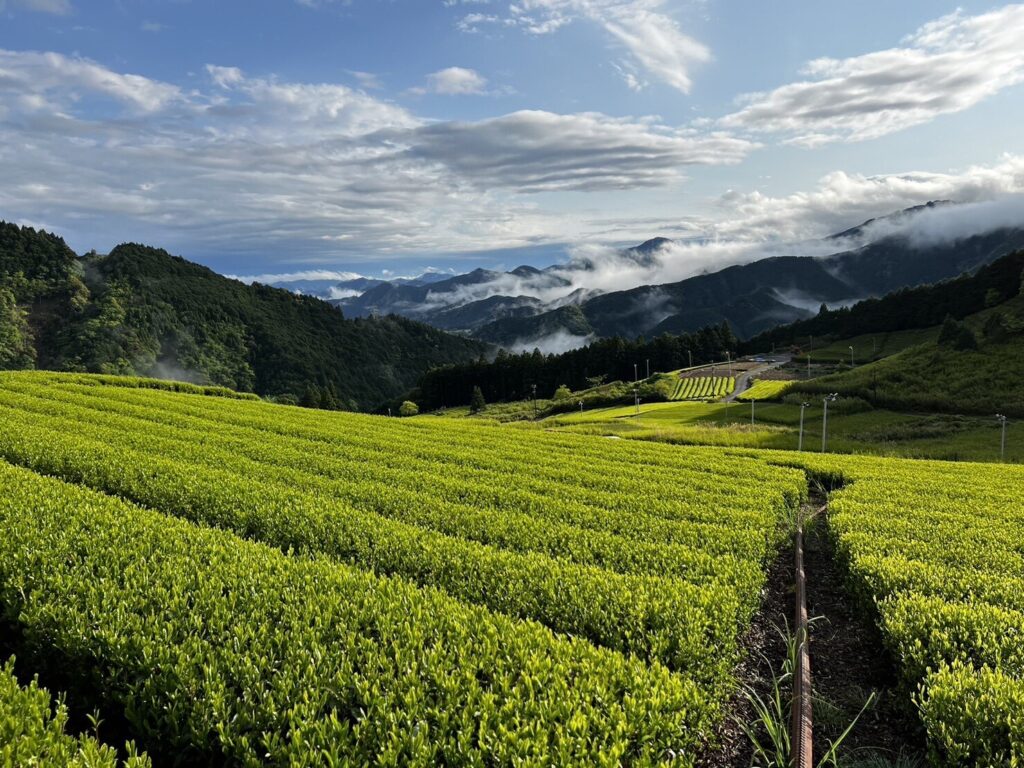
Tea fields covered the mountain slopes, sustaining families and defining the landscape of the region. Tea was more than a crop. It was a livelihood, a culture, and a way of life.
But as tea prices fell, so did the number of growers. Over the past twenty-five years, Shizuoka’s tea farmers have declined to roughly one-seventh of their former number. Many of those who remain are now over seventy.
There is little time left to decide whether this landscape, this craft, and this way of life will continue.
What Must Remain
The tea grown in these mountains is known for its clear golden liquor, delicate fragrance, and refined character. It is made through the traditional art of asamushi—light steaming—a method that can only reveal its beauty when the leaf itself is of exceptional quality.
For more than eight hundred years, people have cultivated tea, refined their craft, and passed their knowledge from one generation to the next.
Can such a legacy simply be allowed to disappear?
Why I Came Here
If tea leaves this region, it will not be only the fields that vanish. The old wooden houses, the mountain villages, the daily rhythms of life, and the culture that has grown around tea over 800 years may fade with it.
At a time when many people are searching for a more meaningful relationship with nature, place, and one another, the value of Japanese tea may be greater than ever.
I came to realize its value.
I left my career in finance, moved into the mountains of Shizuoka, and began this project with one intention:
Not to keep the past alive behind glass,
but to give it a future worth living in.